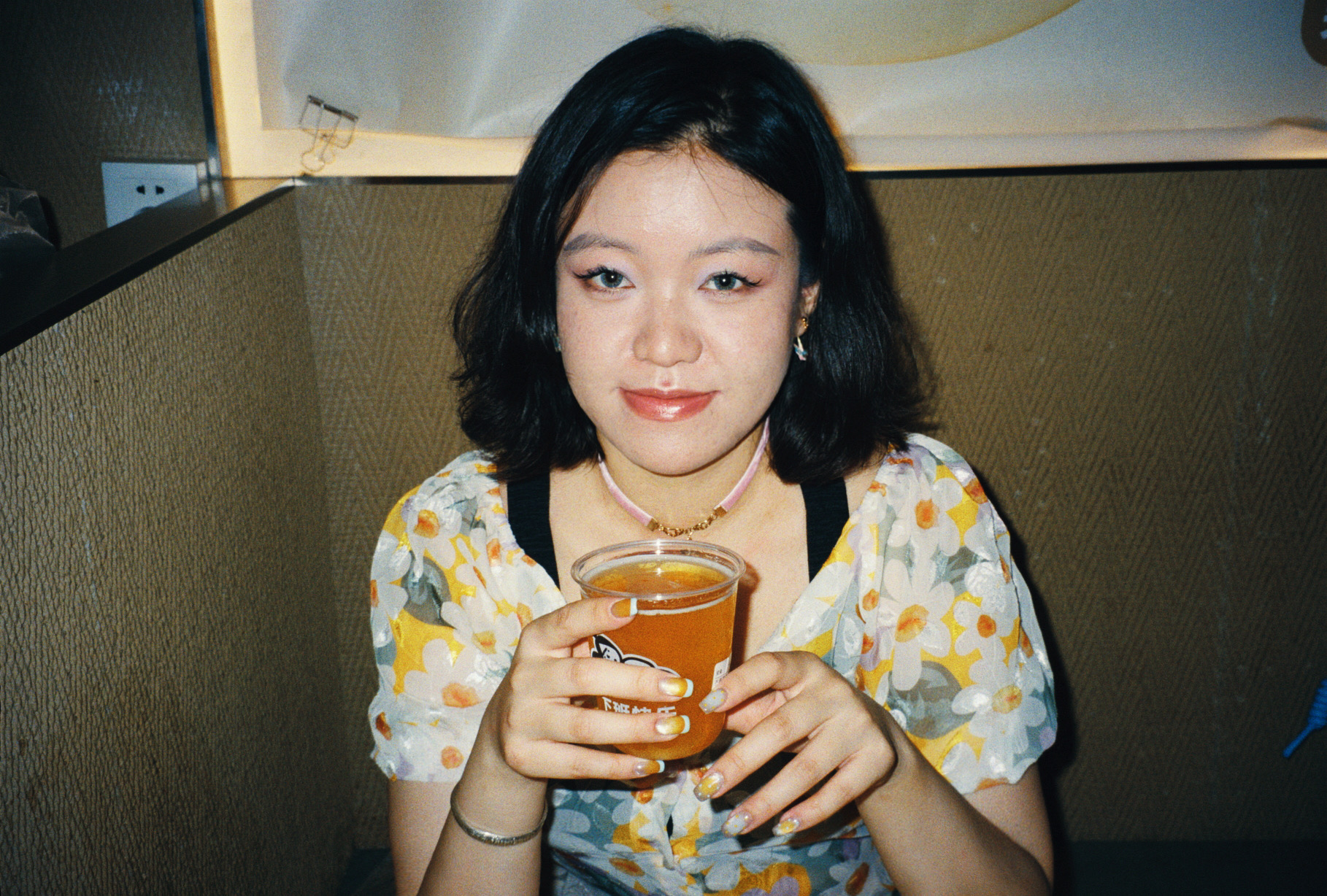
About me
I’m a Ph.D. student in the Center for Cognitive Neuroscience at Duke University, where I am currently working with Dr. Roberto Cabeza, Dr. Simon Davis, and Dr. Tobias Egner. I use a combination of behavioral experiments and neural data to disentangle the mysteries of semantic knowledge, episodic memory, and cognitive control.
Right before Duke, I worked as a lab manager in the Memory and Concepts Lab directed by Dr. Alexa Tompary at Drexel University, where I was trained to conduct experiments using transcranial magnetic stimulation (TMS) and functional magnetic resonance imaging (fMRI).
Previously, I earned my Master's degree in psychology in 2023 from New York University, where I also worked as a research assistant in Dr. David Poeppel’s lab. I conducted independent research on how different conceptual relations (e.g., thematic and taxonomic relations) between written words influence memory performance, while I also collaborated on behavioral and human electrophysiological (MEG) experiments to study music perception and cognition, as well as the influence of auditory perturbation on somatosensory feedback in speech production.
In the year of 2021, I graduated with Bachelor's degree in both psychology and statistics and a minor in French from the University of Wisconsin-Madison. During my undergraduate education, I worked in the Cognitive Development & Media Lab directed by Dr. Heather Kirkorian. I was involved in multiple aspects, including quantitative data analysis and eye-tracking calibration, of studies comparing the effects of live and touchscreen demonstrations on toddlers' cognitive and behavioral development, such as attention, learning, reading, imitation, and object retrieval.
Overall, I’m fascinated by the mechanisms underlying cognitive processes in humans, including language and memory. I view language and memory as the two intertwined pillars of human cognition: memory allows us to store new experiences when drawing on past ones to inform the present, while language scaffolds and abstracts these experiences, expanding the mind beyond our immediate presence and surroundings. I hope to explore these topics using a combination of behavioral and neuroscientific tools, while also trying to model them computationally.
I grew up in Suzhou, China, and speak Mandarin and Wu Chinese. I play the Gu Zheng and learned the recorder as a child. I speak English and French as well, and started learning Japanese in 2025. In my spare time, I cook, bake, draw, garden, listen to music, and board-game crazily. I also find joy in hanging out with my cat, 可乐 (pronounced “Kuh-luh,” meaning “Cola”), and decorating my apartment with color.
Preprints
Cao, W., Raccah, O., Chen, P., Poeppel, D.*, & Tompary, A.* (submitted). The privileged role of thematic conceptual relations in episodic memory. PsyArXiv. [Preprint].
Conference Presentations
Cao, W., Bogdan, P.C., Howard, C.M., Davis, S.W., & Cabeza, R. (submitted). Hippocampal and cortical coding of relational memory types. [Poster presentation]. The 33rd Annual Meeting of the Cognitive Neuroscience Society. Vancouver, BC, Canada.
Cao, W., Raccah, O., Chen, P., Poeppel, D.*, & Tompary, A.* (2024, Nov. 22). The privileged role of thematic conceptual relations in episodic memory. [Poster presentation]. The Psychonomic Society’s 65th Annual Meeting. New York, New York, USA.
Cao, W., Raccah, O., Chen, P., Poeppel, D.*, & Tompary, A.* (2024, Nov. 21). The privileged role of thematic conceptual relations in episodic memory. [Poster presentation]. The 32nd Annual Workshop on Object Perception, Attention, and Memory. New York, New York, USA.
Cao, W., Raccah, O., Chen, P., Tompary, A., & Poeppel, D. (2024, Apr. 14). Thematic relations outperform taxonomic relations in memory retrieval. [Poster presentation]. The 31st Annual Meeting of the Cognitive Neuroscience Society. Toronto, ON, Canada.
Cao, W., Raccah, O., Chen, P., & Poeppel, D. (2021, Apr. 29). The mnemonic basis of taxonomic and thematic conceptual relations. [Poster presentation]. The 2023 International Conference on Learning and Memory. Huntington Beach, CA, USA.